Skip to content



Poland has many tourist attractions to offer. However, most visitors to the country tend to focus on the major cities of Kraków, Warsaw, or Wrocław. In the north, Gdańsk and Poznań are the main draws for visitors. Bydgoszcz, known as Bromberg in German, on the other hand, leads a quiet existence in the shadow of its better-known neighbors—yet the capital of the Kuyavian-Pomeranian Voivodeship has plenty to offer that you won’t find anywhere else so easily.
After all, Bydgoszcz thrives above all on the water. The best way to explore the city is along the river. Since the city’s earliest days, the river has set the rhythm of life in this city on the Brda (German: Brahe). The river plays a major role in the lives of Bydgoszcz’s residents, with many cafés, restaurants, and attractions lining its banks.
The History of Bydgoszcz
To understand Bydgoszcz, it’s worth taking a look back—especially at the period that has shaped the city as we know it today.
The Founding of Bydgoszcz and Polish Rule
The first mention of a settlement at this site dates back to 1238, when it was conquered by Swantopolk II, Duke of Pomerelia. However, Bydgoszcz did not truly take shape until a good hundred years later: After the Teutonic Order occupied and destroyed the settlement between 1329 and 1332, the area returned to Polish rule under the Peace of Kalisz in 1343. King Casimir the Great subsequently had a castle built and granted the city Magdeburg city rights in 1346—the German colonists appointed for this purpose then brought settlers to the region. Thanks to river trade on the Brahe, Bromberg flourished. In 1555, all Jews were expelled from the city. They were not permitted to return until Prussia conquered the region. In the 17th century, the city was occupied several times during wars with Sweden and was nearly destroyed in the process.
Bromberg Under Prussian Rule
In 1772, Bydgoszcz became part of Prussia following the First Partition of Poland. During the Prussian period, the city underwent extensive Germanization but also developed rapidly. The construction of the Bydgoszcz Canal, which connected the Brda and Netze rivers, made the city an important point on the map of 18th- and 19th-century Europe. Bydgoszcz was referred to as “Little Berlin.” Frederick II the Great not only initiated the construction of the canal but also established the railway connection to Berlin, which led to even more intensive economic development in the city.
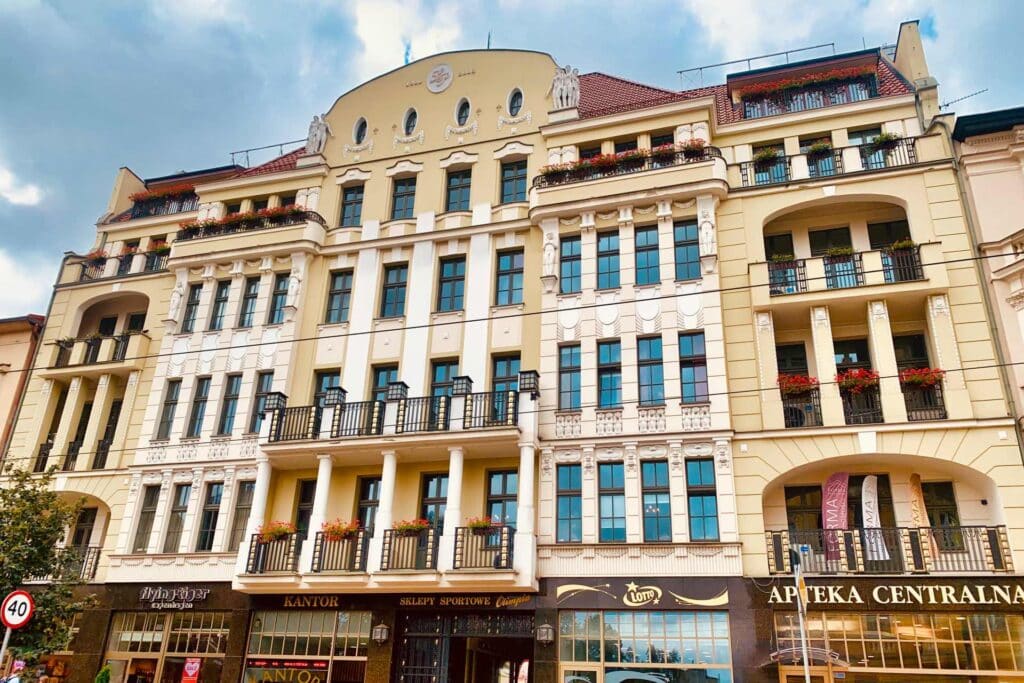
Architectural changes also took place during the Prussian era. Numerous apartment buildings and other structures typical of this era have survived to this day. Among the most monumental structures are the former Prussian Eastern Railway Administration building, the warehouses on Brda Street, and the Main Post Office.
Bydgoszcz as part of the Republic of Poland and under German occupation
In 1920, Bromberg was renamed Bydgoszcz and returned to Poland under the Treaty of Versailles. With the outbreak of World War II, German troops invaded the city—which by then was once again known as Bromberg—and incorporated it into the so-called Reichsgau Danzig–Westprussia. The population suffered repression and mass executions until liberation in 1945. The majority of the Jewish population was transported to extermination camps.
After the end of World War II, the Polish authorities expelled the German residents of Bromberg, and the city transformed from a multicultural metropolis into a predominantly homogeneous Polish city. Soviet soldiers set fire to the theater—which was considered the city’s most beautiful building—just as they had done in Gliwice. The city became the center of a Warsaw Pact defense district and was expanded to include neighborhoods on the left bank of the Vistula River. Universities were established.
Sights in Bydgoszcz
Today, Bydgoszcz is a rapidly developing city that nevertheless retains its unique character and harbors many secrets from times past. The Brda River is the city’s “lifeline”—attractions, events, and encounters are almost always connected to it.
It’s almost impossible to start a tour of Bydgoszcz anywhere other than the Old Market Square, the heart of the city. This extraordinary place is surrounded by historic townhouses. The 18th meridian runs through the Old Market Square, connecting Bydgoszcz to Cape Town and Stockholm, among other cities.
Mill Island with the Rother Mills
Heading north, you’ll reach Mill Island (Wyspa Młyńska)—a green enclave within the city. The island is not only rich in green spaces but also in cafés, restaurants, and museums. A visit to the Rother Mills is highly recommended. This historic mill complex, built between 1848 and 1849, was revitalized and reopened in 2021. Today, it’s not only a venue for cultural events but also houses the permanent exhibition “Crossroads: The History of a City on the River,” which portrays Bydgoszcz as a city inextricably linked to the Brda River. The free observation deck is highly recommended, offering a unique perspective from which to admire the city’s skyline.
Mill Island has retained its original form from two hundred years ago. Its grounds feature beautiful historic museum buildings, a marina, a children’s playground, bike paths, and a beach where visitors can relax during the summer months. The island features old granaries and mills that house exhibitions from the Leon Wyczółkowski Museum (dedicated to one of the most important Polish painters of the late 19th and early 20th centuries). Also worth seeing is the former granary from the second half of the 19th century.
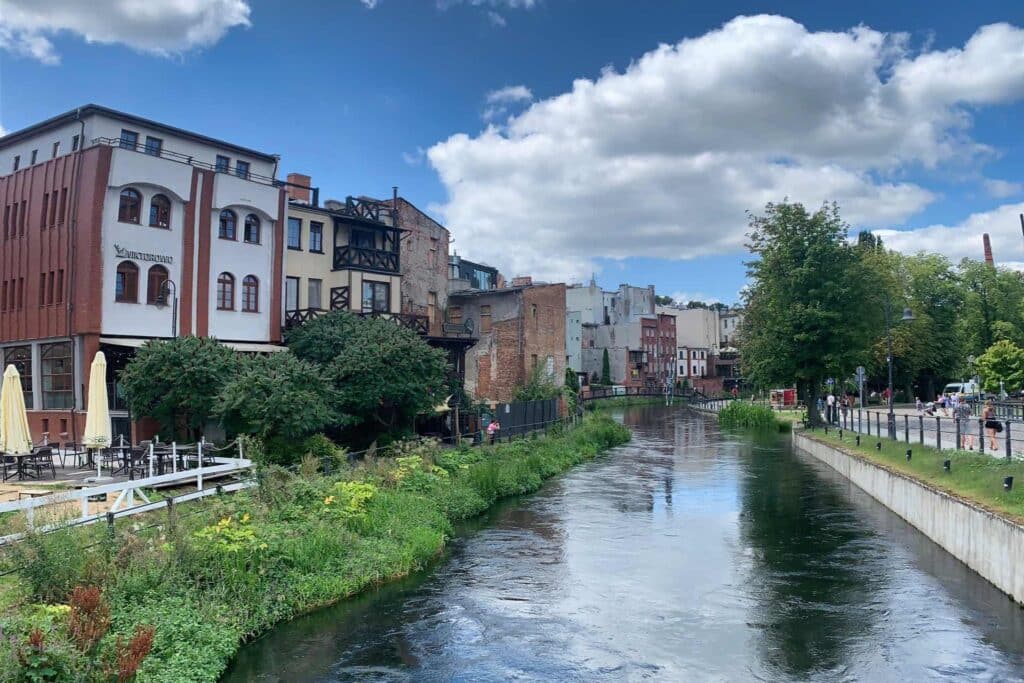
Bromberg’s Venice
Mühleninsel is also home to the Karczma Młyńska restaurant, which serves regional dishes. We highly recommend taking a walk toward the so-called “Bromberg Venice” to try the iconic Polish pierogi at the Pierogarnia Stary Młyn restaurant. They’re available with a wide variety of savory and sweet fillings.
During the summer months, numerous cultural events take place here, attracting visitors from all over Poland. The city is moving closer to the river. The Brda is becoming a gathering place, an open-air living room.
Cathedral of Saints Martin and Nicholas
Located in the immediate vicinity of Mill Island is Bydgoszcz’s oldest building: the Cathedral of Saints Martin and Nicholas. It is the city’s most valuable monument of Old Polish architecture. Built in the 15th century in the Gothic style, the church houses one of Poland’s most precious images of the Virgin Mary—the painting of Our Lady of Beautiful Love, created between 1467 and 1475. The cathedral is a must-see on any tourist itinerary in Bydgoszcz.
Mostowa Street
Not far from the cathedral is Mostowa Street, formerly known as Danzigerbrücke. One of the most famous tourist attractions here is the sculpture “The Man Crossing the River.” The sculpture was created in 2004 to commemorate Poland’s accession to the European Union. What makes the sculpture unique is that it is suspended from a rope stretched between the banks of the Brda River.
Warehouse on Grodzka Street
Also worth seeing are the three granaries on Grodzka Street, which have become a landmark and symbol of Bydgoszcz. They were built between 1793 and 1800 by the merchant Samuel Gottlieb Engelmann. Today, they house a museum dedicated to the city’s history.
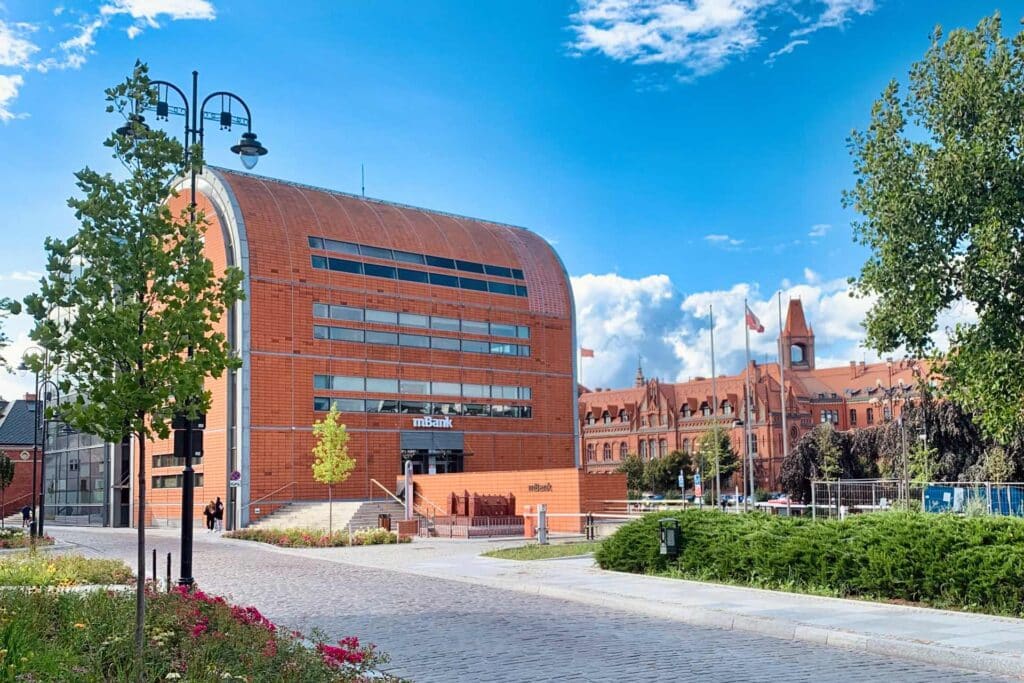
Not far away is the mBank headquarters, whose modern architecture makes it another highlight right on Brda.
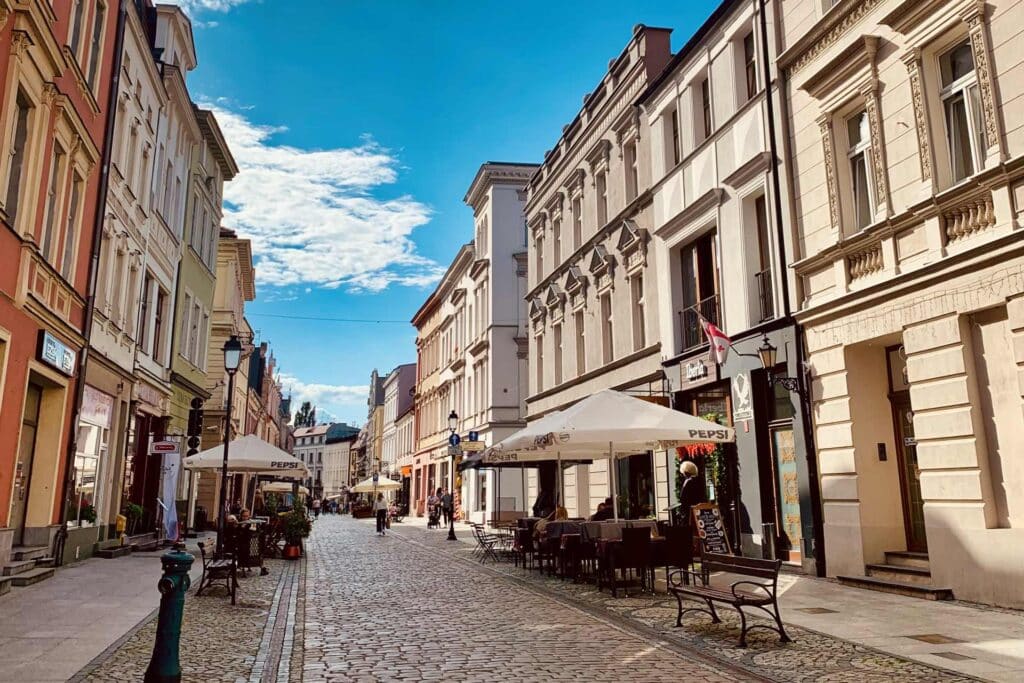
Cafés at the Old Market
In the area around the Old Market, it’s worth trying the local cuisine. Recommended spots include the “Katarynka” pastry shop and restaurant, as well as the “Mocno Nadziane” doughnut shop on Batorego Street, which offers unique Polish desserts.
Boat Tours on the Brda River and the Bromberg Canal
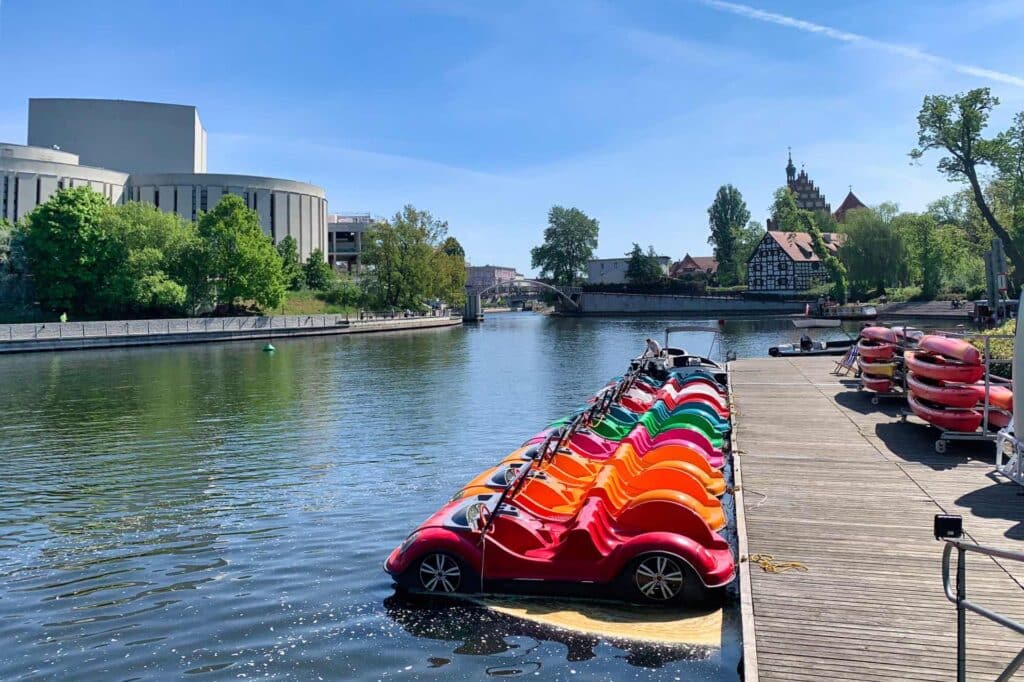
While on the topic of water attractions, we can’t fail to mention the iconic boat tours on the Brda River. The tours on the Old Bromberg Canal are particularly worth highlighting. A must-see is the Bydgoszcz Canal Museum at 10 Staroszkolna Street. It features exhibits on everyday life along the Brda River as well as models of watercraft that navigated the waters of Bydgoszcz in the second half of the 20th century. Those who prefer to get active on their own can do so by pedal boat or canoe, both of which are available for rent from local rental companies.
Another attraction is the boat rides from the “Gwiazda” pier on the Old Canal toward the city center. These are among the most unique experiences on offer, as they allow you to witness a ship passing through a lock. This is not only a fascinating technical experience but also a journey back to a time when canals and locks were central to transportation.
Christmas Market on the Bridge
In winter, Bydgoszcz takes on a different character. The Brda River flows more slowly, its waters darker, almost mysterious. A small Christmas market springs up on one of the bridges. It is the only Christmas market of its kind in Poland to be held on a bridge. String lights shine over the water, their reflections dancing on the river’s surface. The scent of mulled wine and spices hangs in the cold air. People stop, look down, and listen to the water below them.
Guests can look forward to numerous regional specialties, beverages, local dishes, and unique Christmas crafts. The Old Market is decorated not only with familiar elements such as the Christmas tree and the nativity scene, but also with a structure inspired by the German Christmas pyramid, featuring moving figures inside a cone-shaped structure.
The market isn’t a noisy place. It’s a moment to pause. A brief stop on the journey through winter. Even now, the Brda is there—not the center of attention, but always present. Summer or winter—the Brda sets the rhythm of the city. It brings people together, sometimes loudly, sometimes quietly. If you really want to experience Bydgoszcz, you should follow the river. It tells the city’s story better than any map.
For anyone who wants to plan their stay in Bydgoszcz even better, I’ve put together a concise digital travel guide that includes selected itineraries, cafés, and practical tips—as a little supplement to the article.
“Ster na Bydgoszcz” Festival at Brda
The“Ster na Bydgoszcz”(“Ship’s Tax to Bydgoszcz”) Festival on the Brda River is an annual summer event held on Mill Island that is aimed not only at water sports enthusiasts but also at residents and tourists seeking relaxation by the river. The festival is a celebration of the city’s water-based identity.
The program is extensive and includes activities for the youngest visitors, theater performances, workshops, and entertainment. Bydgoszcz’s cultural institutions also participate in the festival, and a variety of concerts and shows ensure an exciting evening for locals and visitors alike. Among the standout attractions are sailing photo exhibits, shanty concerts, and dragon boat races. During the “Ster na Bydgoszcz” festival, life moves right down to the water’s edge. Music fills the air, and voices mingle with the gentle sound of the current. People sit on the riverbank, barefoot in the grass, gazing out at the river. Boats glide slowly by, and kayaks trace calm lines across the water’s surface.
This isn’t about a grand spectacle. It’s about closeness. About sharing the experience of summer together. The Brda River quietly carries these moments forward—from one bank to the other.
Food and Drink in Bydgoszcz
After taking in so much history and breathing in the fresh river air, you’ve earned a bite to eat. Here’s a quick overview of the restaurants mentioned in the text.
- Katarynka, Alter Markt. A pastry shop and restaurant in one, right on the city’s most beautiful square. Ideal for a coffee break between sightseeing stops or a leisurely dinner with a view of the historic townhouses.
- Mocno Nadziane, Batorego St. The name means something like “generously filled”—and that’s exactly what it is. Here you can get unique Polish doughnuts (pączki) with unusual fillings, perfect for a quick snack.
- Karczma Młyńska, Mill Island (Wyspa Młyńska). Hearty regional cuisine surrounded by the island’s lush greenery—the perfect spot for a substantial meal after a stroll along the Brda River.
- Pierogarnia Stary Młyn, on the way to “Bromberg’s Venice.” The place to go for classic Polish pierogi, served in a wide variety of savory and sweet flavors. Don’t miss them!
Where to Stay in Bydgoszcz
Whether you’re planning a short trip or a longer stay, in Bydgoszcz you’ll find the right accommodations for every budget—either near the river or right in the Old Town.
- Domy Na Wodzie La Mare Houseboats Bydgoszcz – Since we’ve been writing about the sights along the river this whole time, it’s definitely worth staying right on the river. It’s perfect that these beautiful and cozy houseboats are located right across from the opera house.
- Campanile Bydgoszcz – This budget hotel chain is located in a green setting near the Brda River and offers modern rooms at a fair price. It’s a solid choice if you’ll be out and about most of the day anyway.
- Hotel Pod Orłem – This historic 4-star hotel is located right in the heart of the city center, just a few minutes’ walk from the Old Market Square, and combines classically furnished rooms with a location that puts all the major sights within easy walking distance. Not only is the building historic, but the rooms are also affordable.
- Hotel Słoneczny Młyn – If you want to not only explore but also experience the history of Bydgoszcz’s mills and river, this is the perfect place for you: The city’s first 4-star hotel is housed in a historic 19th-century mill right on the Brda River—an atmospheric setting that’s perfect for a stay along the Brda.
P.S. For anyone who wants to plan their stay in Bydgoszcz even better, Katarzyna has created a concise digital travel guide featuring selected itineraries, cafés, and practical tips
—as a little supplement to this article. You can purchase it at a reasonable price via the link.