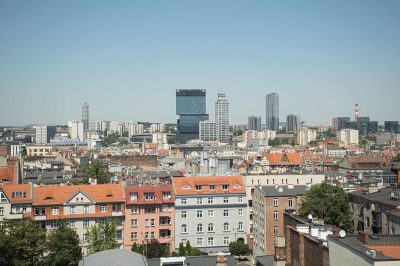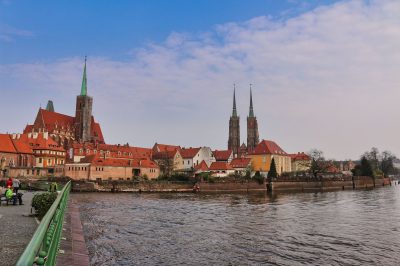


If someone had asked me what on earth the Górnośląsko-Zagłębiowska Metropolia—GZM for short—is, I wouldn’t have had a clue. That’s why I was skeptical at first when I was invited to the Kierunek GZM festival. For one thing, because I really had no idea what the GZM was. And for another, because I didn’t know what exactly a “festival for microadventures” was supposed to be. But after a quick bit of research, it turned out that the invitation was a real stroke of luck, because the Kierunek GZM festival offers lots of short tours, hikes, concerts, and parties in the metropolitan region around Upper Silesia. Although, as I discovered, it’s a bit more complicated than that. So, first, a brief excursion into recent history—which is, however, connected to the history of Silesia and all of Poland.
What is GZM?
The Górnośląsko-Zagłębiowska Metropolia is the metropolitan area of Upper Silesia and the (coal) basin. This refers to 41 cities and municipalities in the region that, much like the Ruhr region, are directly adjacent to one another. A Polish law allowed these metropolitan regions to form an association that, while allowing each city to have its own mayor and other officials, nevertheless coordinates matters such as public transportation. In addition, there is also the Silesian Voivodeship, which is similar to a federal state and includes additional municipalities that are not part of the GZM. Naturally, I then wondered why the whole area isn’t simply called something like “Upper Silesian Metropolis.” Well, the reason for this was likely the residents of Zagłębie, the “Basin.” The region around the city of Sosnowiec historically belonged to Lesser Poland; unlike Silesia, for example, it was neither Austrian nor Prussian, but had been annexed by Russia during the Partitions of Poland. As a result, there are mutual reservations on both sides of this historical border. Or as one Katowice resident put it: “They’re not Silesians.” Nevertheless, a merger of the municipalities makes sense, since the cities there practically merge into one another. They’re also linked by their industrial history and its resulting consequences. Hence the name GZM.
Kierunek GZM: What Is It?
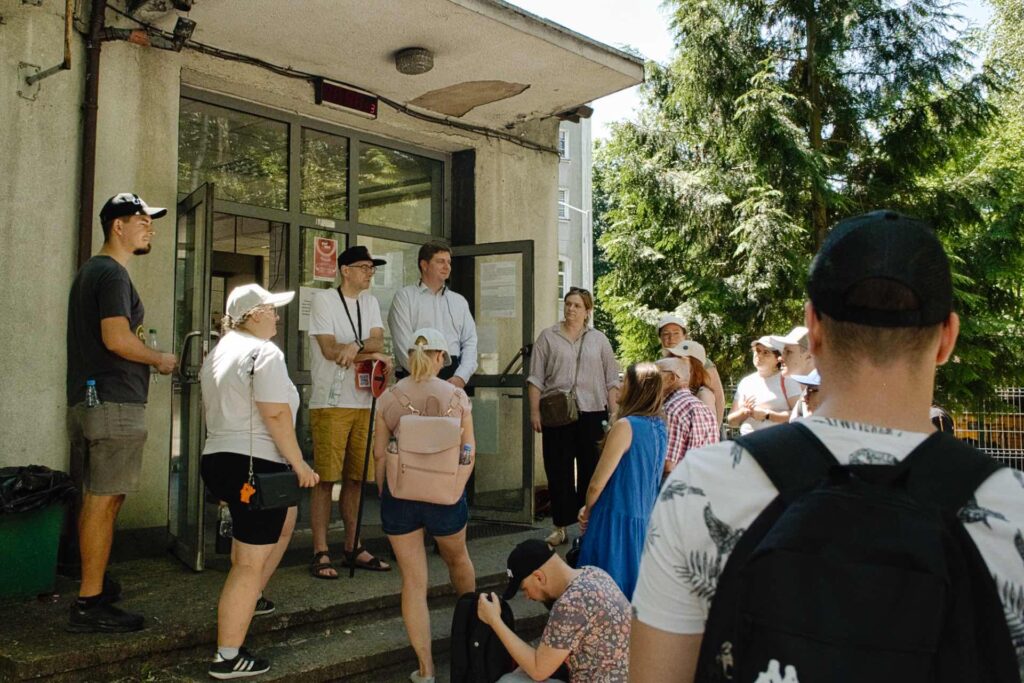
Kierunek GZM is a “festival of microadventures” in the metropolitan region. And that’s exactly how I experienced it. I attended the fifth edition at the end of June 2026. What sets Kierunek GZM apart from traditional city tours is precisely this “microadventure” format: small, time-limited experiences that you can enjoy in just a few hours. You put together your own “schedule” instead of being guided by a fixed program. In total, there were over 250 events under the festival’s umbrella, spread across all 41 municipalities of the GZM. The events are worthwhile both for visitors who have never been to the region and for those who have been here several times and know their way around well. Moving between events is also made easier by the fact that participants can use the metropolitan region’s public transportation for free throughout the weekend. This means you can also ride the Upper Silesian tram system, which has one of the largest networks in the world (incidentally, a guided tour of a tram depot is also part of the program).
Important: You must register in advance for many events. Some also sell out quickly, so it’s a good idea to register shortly after the event schedule is released. The festival takes place every year on a weekend in late June or early July. It also celebrates the creation of the GZM metropolitan region, which was established on July 1, 2017.
Kierunek GZM: My Experience
Friday Night: Ghosts Under the Open Sky
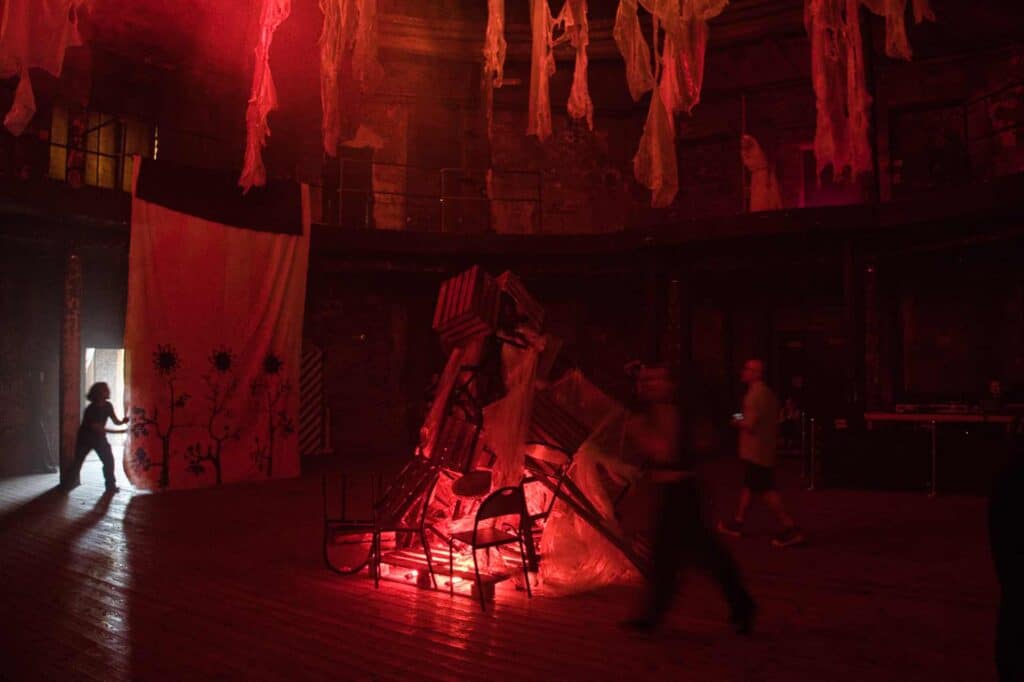
The event kicked off by taking me straight to the ruins of the Victoria Theater in Gliwice. During “Upiory w Ruinach” (“Ghosts in the Ruins”), Kamil Iwanicki led the way through the site at night, while the Trajektoria Theater from Katowice—an experimental, performance-based theater group—created spine-tingling moments amid the crumbling walls. It’s a strange experience to walk through the remains of what was once a magnificent entertainment venue. During the tour, visitors could learn about the history of the theater in the former German city and the development of Polish theater in the region. A performance by Trajektoria also drew attention to the theater’s destruction after the end of World War II. Soviet soldiers had simply set it on fire. It is precisely this combination of location and performance that makes such events so powerful—you don’t just visit a ruin; you experience it.
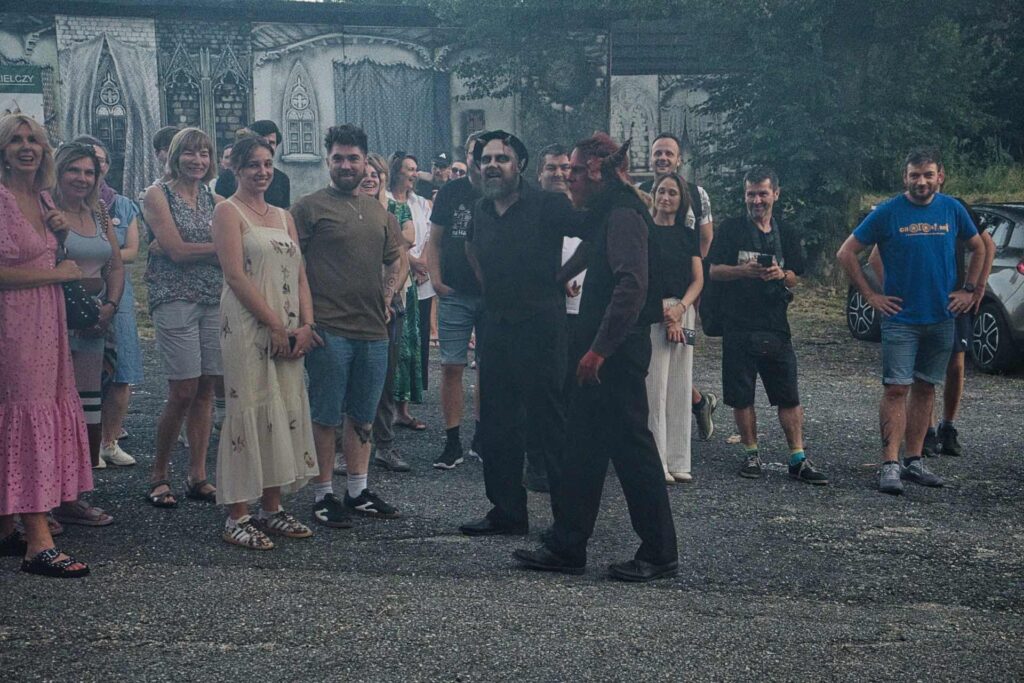
No sooner had I recovered from that than we moved on to “Śląski horror albo gotyk po rudzku” (“Silesian Horror or Gothic, Ruda-Style”), hosted by Adam Kowalski, featuring animations and performances by the Lufcik na Korbkę Theater. The title doesn’t overpromise: here, regional superstition met dark humor. The actors reenacted scenes from the history of Ruda Śląska and the mythology of Silesia. In powerful voices, they explained the region’s legends and led us through the forest, across fields, and to the town’s cemetery. Alongside the staged horror, however, there was also a mosquito nightmare. The day’s heat made the little beasts especially hungry. The mosquito repellent helped, though.
Saturday: From the Coal Mine to the Retro Disco
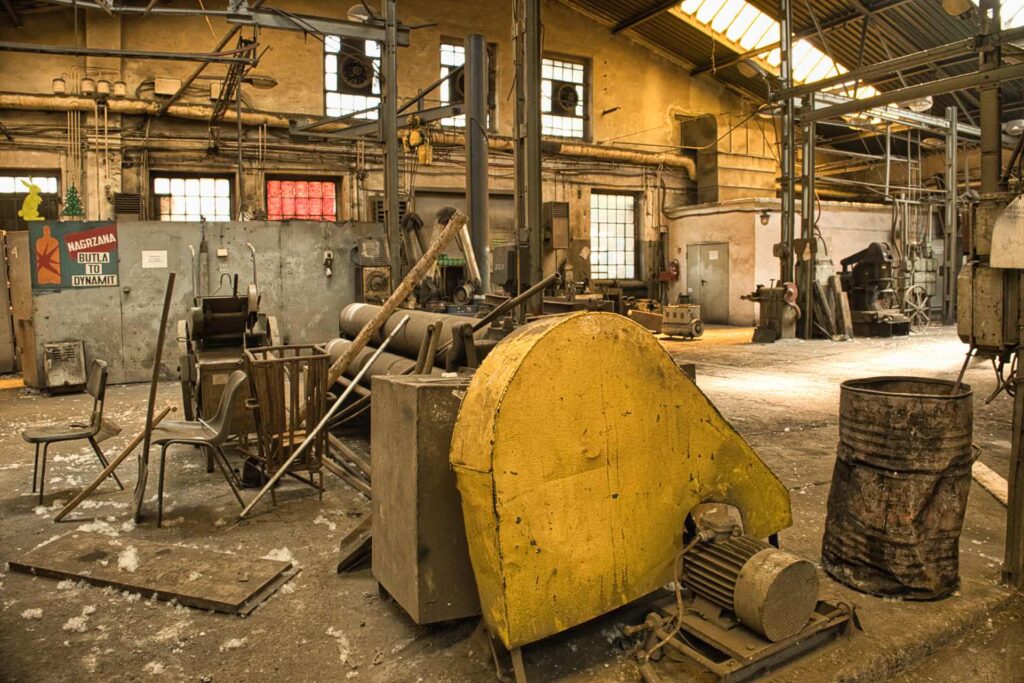
Saturday held the absolute highlight for me—something I’d organized on my own, separate from my group: a visit to the former “Wujek” coal mine, which is no longer in regular operation. The tour was organized by journalists from the Silesian branch of Gazeta Wyborcza. They explained the history and, together with staff members, guided us through the industrial complex. In addition to the tour of the coal mine, there are also many other industrial monuments that are opened specifically for Kierunek GZM and are otherwise rarely—if ever—accessible to the public.
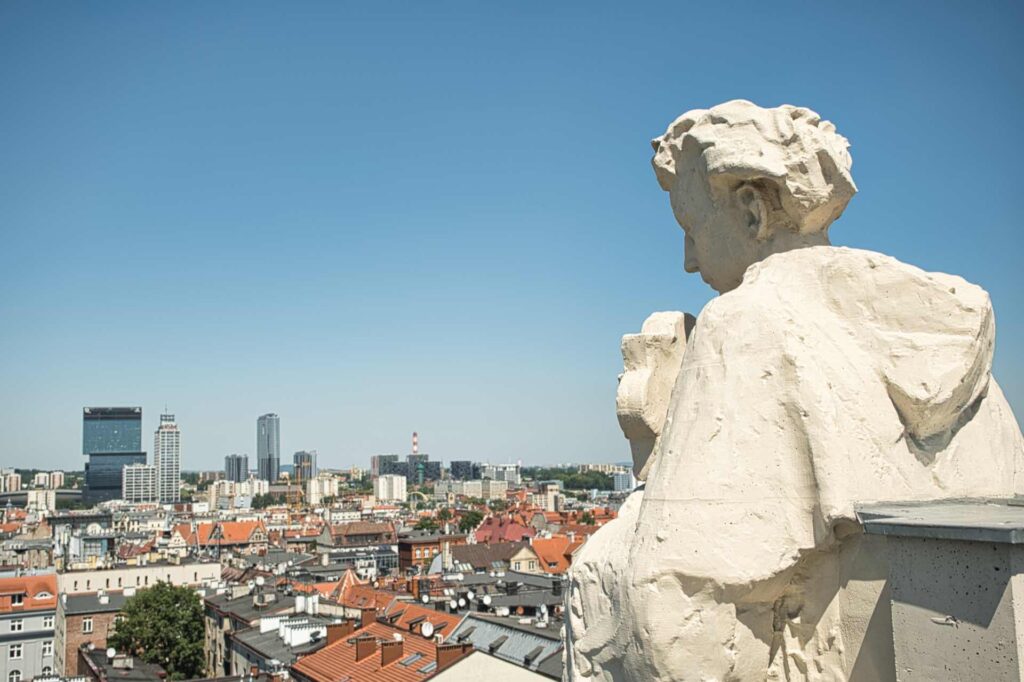
This was followed by a complete change of atmosphere: we were given a guided tour of the “Śląski Watykan” (“Silesian Vatican”). During the tour, we were able to explore the secrets of Christ the King Cathedral in Katowice and were even allowed to go up to the cathedral’s roof and into the bishop’s garden. The tour was led by Father Rafał Skitek. The nickname “Silesian Vatican” is no coincidence—the sheer grandeur of the cathedral and its significance for the region’s religious life certainly justify the comparison. After all, it is also the largest church in Poland. The view from the roof over the Katowice skyline was one of the highlights of the weekend for me.
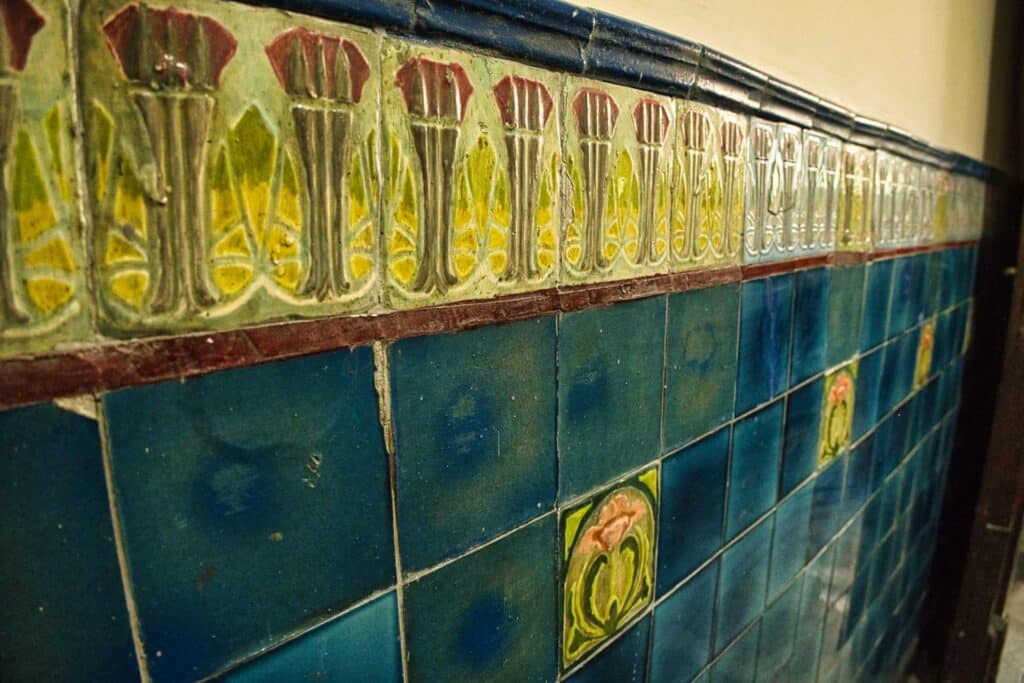
After a well-deserved lunch break at the Żurownia restaurant, where we enjoyed Silesian specialties, we continued on to Bytom for “Bytom ceramiczny – tropem tajemnicy” (“Ceramic Bytom – In Search of the Mystery”). There, Teresa Ebis guided us through the city’s alleys and backyards. Teresa is a true Bytom expert and knew the year of manufacture for every tile on our tour. We would never have discovered those amazing details on our own during a walk. By the way, she leads a different guided tour for Kierunek GZM every year. I highly recommend it!
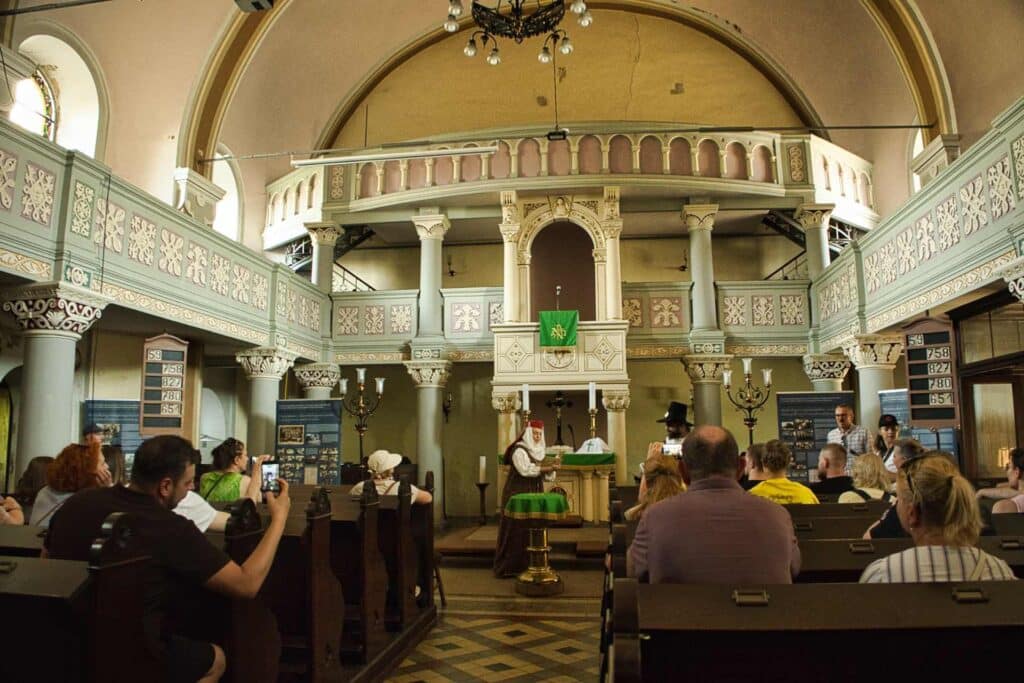
That evening took us to Tarnowskie Góry for “Jak to było naprawdę?” (“How Was It Really?”), an evening walk—set in a fictionalized world—with “miners” (Gwarkowie) through the mysteries of the mining town. We were guided by Sandra Plewnia and Marek Panuś, who also donned period costumes for the occasion. With its UNESCO-listed silver mine, Tarnowskie Góry is already one of the region’s must-see destinations, and a nighttime walk with costumed storytellers lent the town’s mining history a unique atmosphere all its own. My highlight of the tour was the visit to the Protestant church on the Ring.
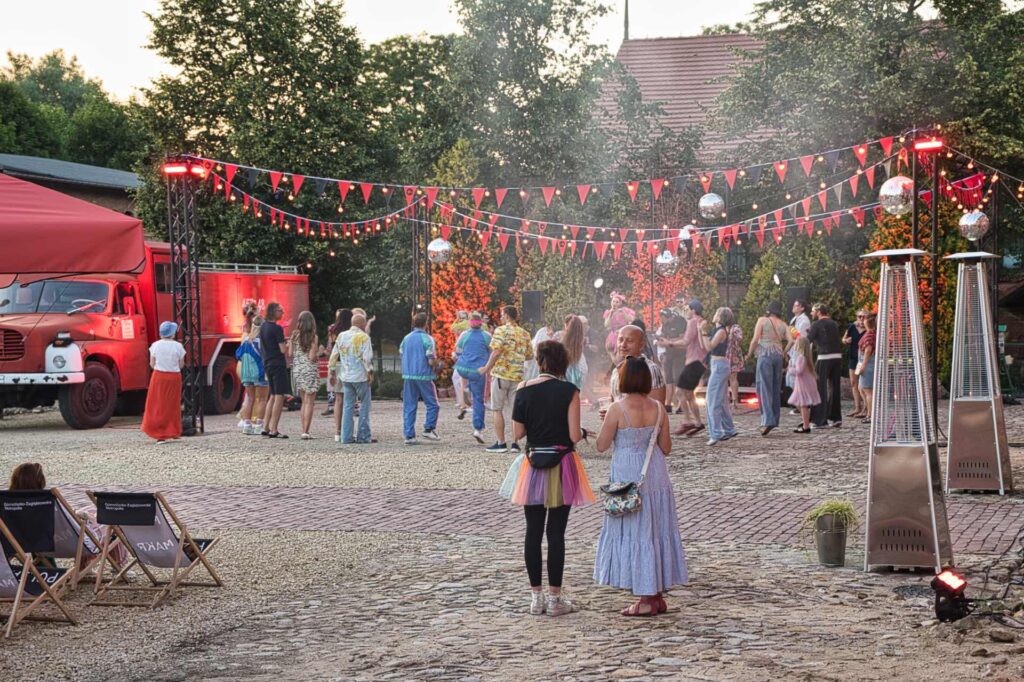
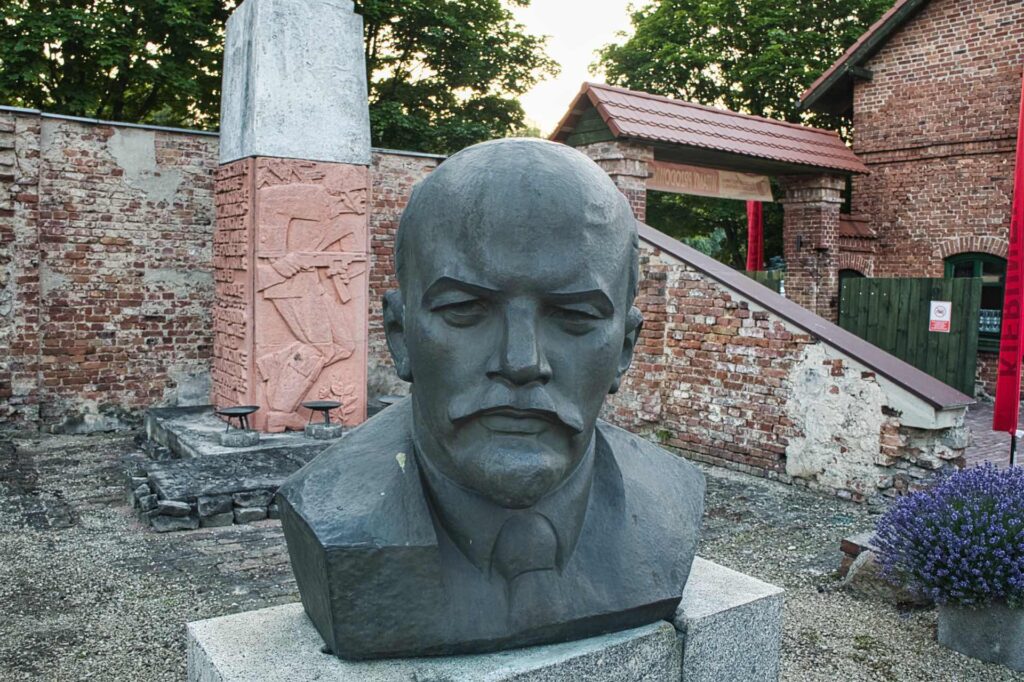
The day ended with a real change of pace—and a wonderful one at that: At the Museum of the Polish People’s Republic (Muzeum PRL-u) in Ruda Śląska, a retro disco was in full swing amid busts of Lenin and an old fire truck. We were all supposed to dress like people did in the PRL. Unfortunately, I didn’t have anything suitable with me, but the evening was still fantastic—I got to discover old Polish hits (my Spotify playlist has grown to include songs by Wanda i Banda, among others) and chat with my Polish colleagues. It almost gave the impression that communism in Poland wasn’t so bad after all.
Sunday: Traces of the Polish People’s Republic and a guided tour with the Voivode
On Sunday, we continued our exploration of communism in Silesia. During the guided tour “Obywatelu, poznaj swoje miasto! – Katowice śladami PRL” (“Citizen, Get to Know Your City! – Katowice in the Footsteps of the People’s Republic”), we explored the history of the PRL in Katowice. The tour was led by three costumed ladies—Dorota Janas, Katarzyna Kołodziejczyk, and Grażyna Piwowarczyk—from the Silesia Events agency team. Anyone who had previously viewed Katowice’s postwar architecture merely as gray concrete was given an explanation of the ideology, planning, and everyday history behind buildings like the Superjednostka or the Spodek—and saw the city through different eyes afterward. The three women represented three elements that defined life under communism in Poland: the nomenklatura, connections, and corruption.
Unfortunately, I had to skip the last item on the program because of my departure. I would have loved to attend, though, because Silesian Voivode Marek Wójcik met with my fellow travelers and led the guided tour “Historia i tajemnice monumentalnej perły architektury” (“History and Secrets of a Monumental Architectural Gem”) through the building of the Silesian Voivodeship Office, the former Silesian Sejm from the interwar period. It’s an impressive building that I’ve walked past several times myself. Hopefully, the tour will be offered again during a future edition of Kierunek GZM. If so, I’d definitely make up for it right away.
Kierunek GZM: Here’s What’s Expected to Happen Over the Next Few Years
As mentioned, I was invited on a press trip to the festival. The festival has only been around for a few years. Until now, it has primarily been aimed at people from the region. However, the organizers now want to attract not only tourists from Poland but also from the West in the future. During our visit, though, the events were conducted exclusively in Polish. We had a great translator with us. However, there are plans to offer events in foreign languages in the coming years to attract more guests from abroad. It’s therefore worth visiting the festival’s website to find out more.
Here’s another tip: Use Google Translate or another tool to translate the website directly. Pick out some events that have plenty to see and sign up that way. Even if you don’t understand what’s being said, this way you can visit special places that are otherwise rarely accessible. For example, I personally was able to take some incredibly great photos on the grounds of the Wujek coal mine. Those photos alone made the trip worth it.
My personal take on the Kierunek GZM Festival
Kierunek GZM is not a traditional cultural festival. Forty-one cities and municipalities are showcasing themselves here, and the events are just as diverse. We got a small but good overview of the festival. The events we attended were very different from one another, both in terms of their themes and in terms of their organization and presentation. I’d also checked the Kierunek GZM website to see what other events were on the schedule, and there were really a lot of them that would have interested me as well. There’s something for almost every taste: industrial heritage tours, theater, music, quests, bike tours, and much more. The sheer variety of formats was impressive. Anyone who wants to get to know Upper Silesia beyond the usual sights should mark the next edition of the festival on their calendar. I, for one, am definitely looking forward to more. Hopefully, the language issue I just mentioned will also be resolved in the future.
Note: I was invited by the Górnośląsko-Zagłębiowska Metropolia to a three-day press trip for the Kierunek GZM festival. However, this does not affect my opinion. and this article was written independently.
Cover photo: Radoslaw Kazmierczak; all other photos are my own.