Skip to content



Timișoara is a city in the west of Romania and is worth a visit not only because of its multicultural character and eventful history. There is a lot to see and do in the city. Here we take a look at the history of Timișoara, introduce you to the most beautiful sights and give you a few practical tips for your visit. Let’s go!
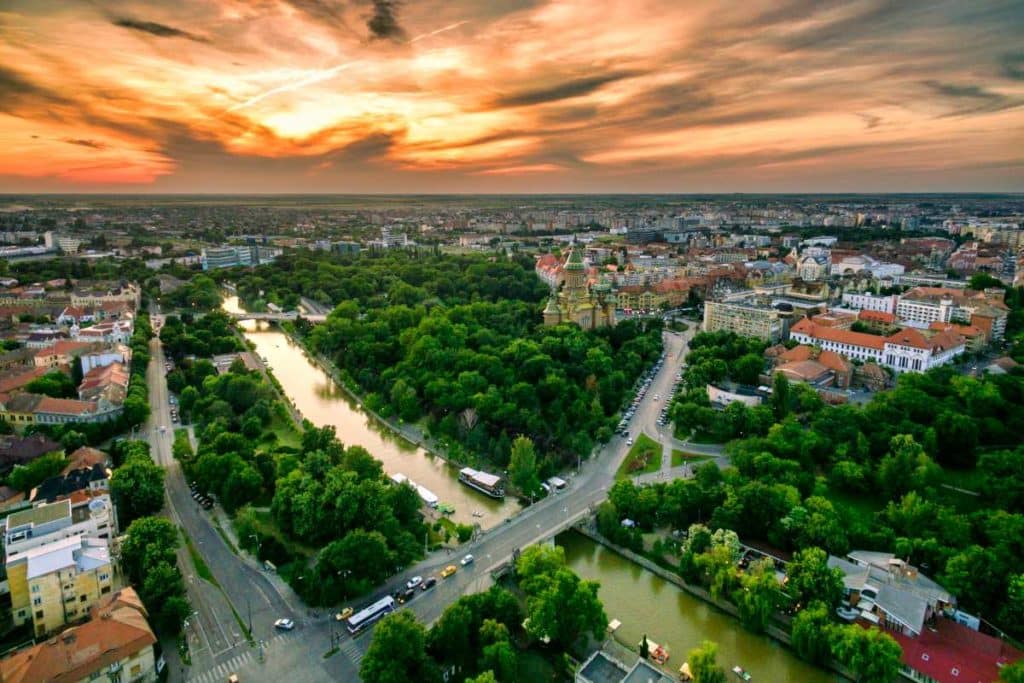
This is Timisoara
Timisoara, the prospective European Capital of Culture 2023 (due to the coronavirus pandemic, the Capital of Culture year originally planned for 2021 is to be postponed) is the historical heart of the Banat region. This region, which is divided between Hungary, Serbia and Romania, today forms the far west of the country on the Romanian side and can also be considered Romania’s gateway to the west due to the importance of the city. With around 320,000 inhabitants, Timișoara is now the third largest city in the country after Bucharest and Cluj-Napoca.
The history of Timisoara
The region around Timisoara was already settled in ancient times. In the Middle Ages, the region was ruled by various tribes and principalities: Avars were followed by Pechenegs, Cumans, Bulgarians, Wallachians and finally Hungarians. It is not known exactly when the town was founded, but a fortress is documented for the High Middle Ages, which was located on the site of today’s Siegesplatz.
The fortress of Timisoara
Between 1316 and 1323, Timisoara was briefly the seat of the Hungarian King Charles Robert I, who had the city further expanded. In the 16th century, Timisoara was then conquered by Ottoman troops, who ruled here for over 150 years. After the conquest of the region by Austria, Timisoara was developed into a fortress city, as can still be seen today in the Maria Theresa Bastion.

Under Hungarian rule
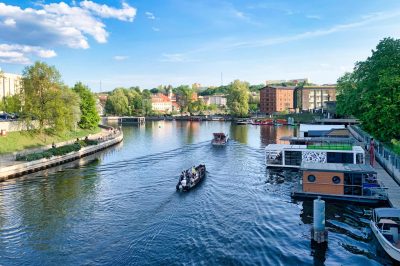
Timisoara, where many Danube Swabians lived, experienced its greatest heyday in the 19th century. After the Austro-Hungarian Compromise, the city was assigned to the Hungarian half of the empire and subsequently developed magnificently. At that time, the wild Bega River was also canalized, which still shapes the face of Timișoara today.
Timisoara as part of Romania
After the First World War, Timisoara fell to Romania. During the Second World War, parts of the city were destroyed in Allied air raids. After Romania had switched sides and was no longer fighting together with Germany, German troops made an ultimately unsuccessful attempt to take Timisoara. The Communist takeover was also accompanied by the expulsion of a large part of the German population.
Starting point of the revolution
Timisoara was then of national importance in the late 1980s. The Romanian Revolution, which would ultimately cost Nicolae Ceaușescu’s dictatorship his office and life, began here. The outbreak of long-fermenting discontent among the population was triggered by the transfer of a local priest. A massacre of the civilian population took place during demonstrations on what is now known as Victory Square; the exact number of victims is still unknown. Later, however, the demonstrators gained control of the city, marking the beginning of the end of the communist regime.
Timișoara today
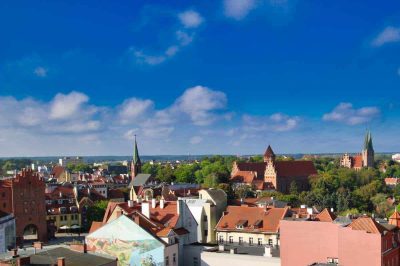
In the meantime, Timisoara has shed the gray veil of its communist past and presents itself as a modern European city in which numerous buildings have been restored to their former glory in recent years. There is something to discover on almost every corner in the city center, which is why we would like to introduce you to the most beautiful and interesting places in the city.
Piața Victoriei
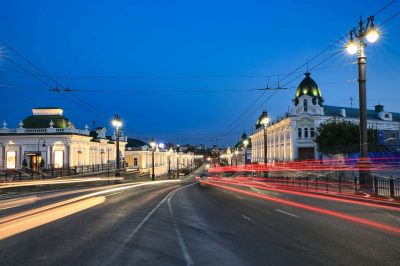
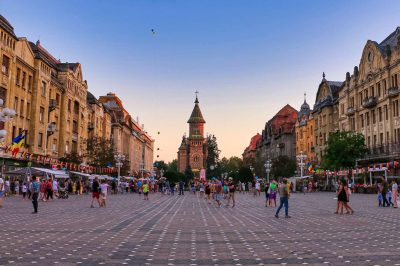
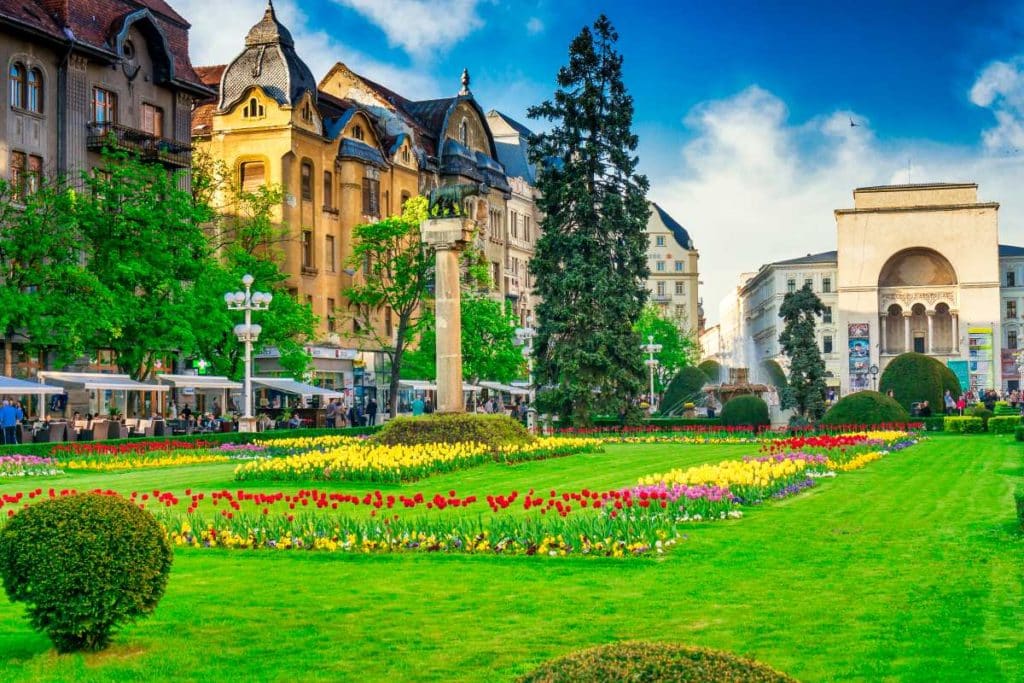
Piața Victoriei is not only one of the city’s most popular meeting places, but also something of a promenade in Timisoara. The elongated, rectangular square was once an avenue, which was transformed into a magnificent boulevard at the beginning of the 20th century. Later, several green areas were added, which still characterize the face of the square today. Even before reunification, streetcars and cars were banned from the square, making it a purely pedestrian zone today. In addition to the Orthodox Cathedral and the National Theater, there are numerous other buildings of architectural interest. Art Nouveau and Classicism dominate here, but there are also a few architectural sins from the Communist era.
The square played an important role during the Romanian Revolution, as around 40,000 people gathered here on December 20, 1989 to protest against the government. Several leaders were able to give speeches and address the people from the balcony of the theater described below, an important milestone on Romania’s path to democracy.
Catedrala Mitropolitană
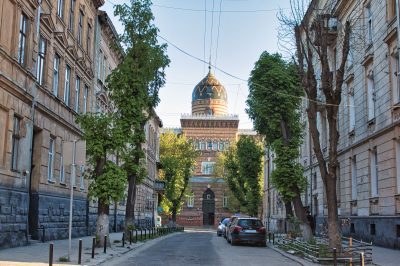
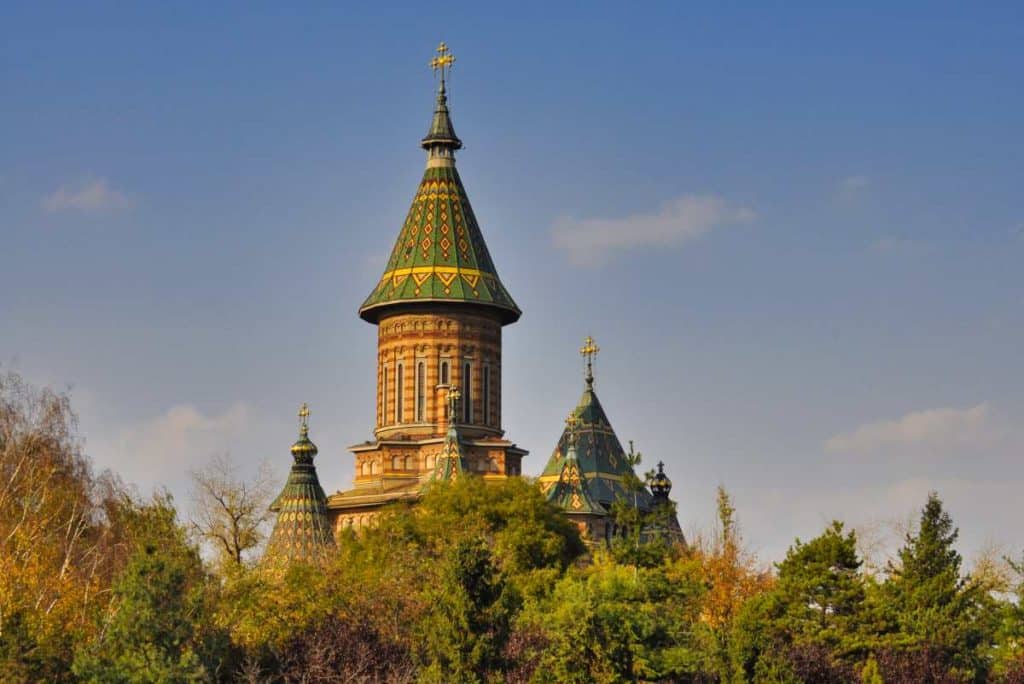
The Cathedral of the Three Hierarchs, often referred to as the Metropolitan Cathedral, is one of Timisoara’s most important landmarks. As if on a vanishing point, the elongated Piața Victoriei runs right up to this church. With its exotic-looking roofs and delicate shape, it is perhaps the city’s most important place of worship. It was only completed during the Second World War and was a gift from King Michael I to the city. Stylistically, it is a mixture of Byzantine and Moldavian elements, with unmistakable echoes of monasteries in the north of the country. The exterior splendor continues inside, with mosaic floors, a gilded iconostasis covering an area of over 130 m² and valuable wall paintings are just some of the highlights that await you here.
Teatrul Naţional
The National Theater on the opposite side of Piața Victoriei forms a massive and geographical counterpoint to the Metropolitan Cathedral. Destroyed several times by fire, it was completed in its current form in the 1920s while retaining its neo-Renaissance façade. Echoes of the Italian Renaissance are indeed unmistakable and yet the building appears very modern and in no way older than the Cathedral of the Three Hierarchs. You can get an impression of the interior with its ornate galleries and balconies and the huge ceiling painting by attending a performance.
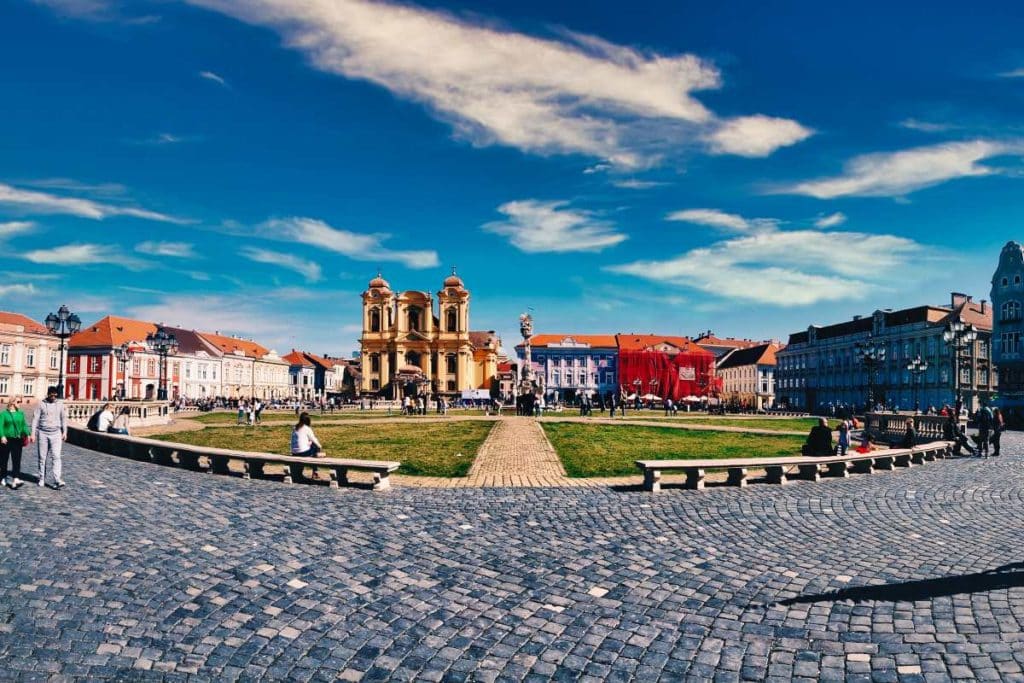
Piața Unirii
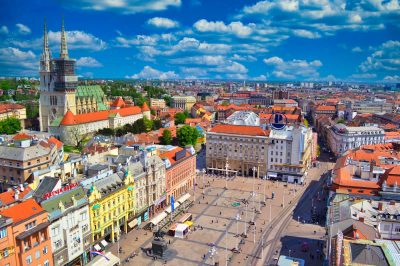
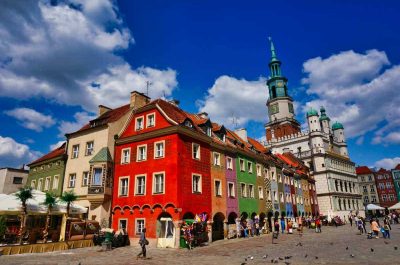
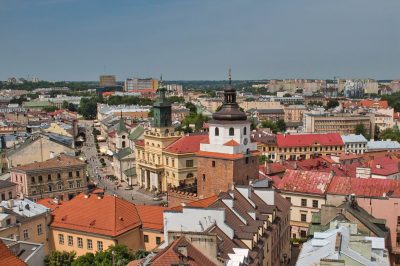
Three squares characterize the face of the center of Timișoara, Piața Unirii, Piața Libertății and Piața Victoriei: but the most beautiful of them is probably Piața Unirii. The oldest square in the city has long since become a kind of calling card for Timisoara. Formerly known simply as “Main Square”, after the Austro-Hungarian Compromise it was named after István Losonczy, who defended the city against the Ottoman Empire in the 16th century. Today, the square is a total work of art consisting of baroque, art nouveau and classicist buildings grouped around a green area with a plague column. However, the Catholic cathedral, the Baroque palace and the Serbian cathedral, which we would like to introduce to you below, attract the most attention.
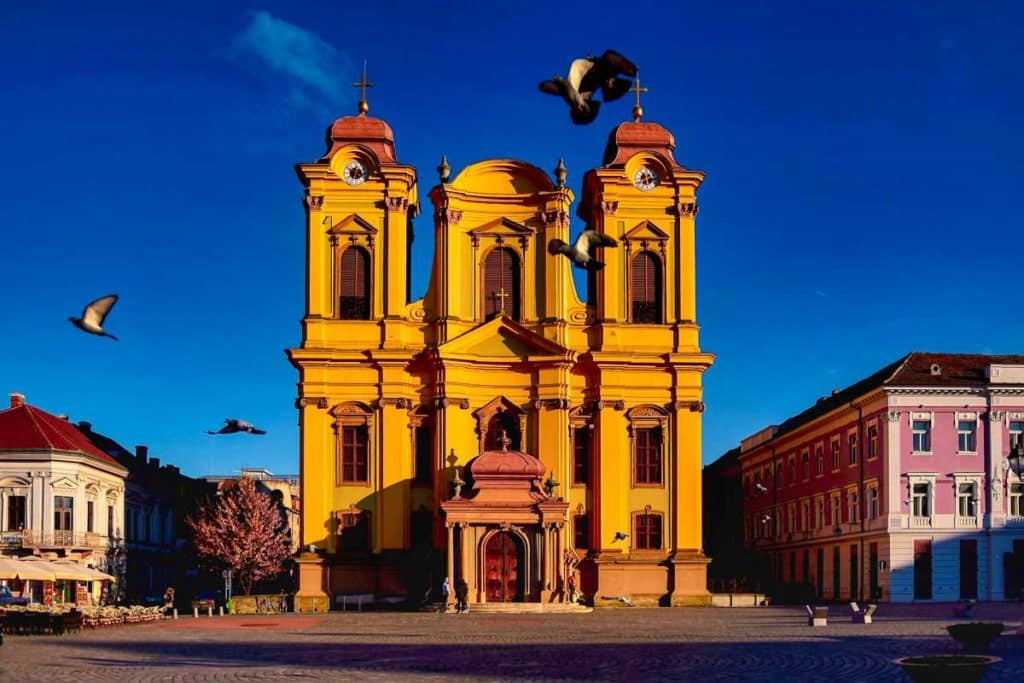
Catedrala Sfântul Gheorghe
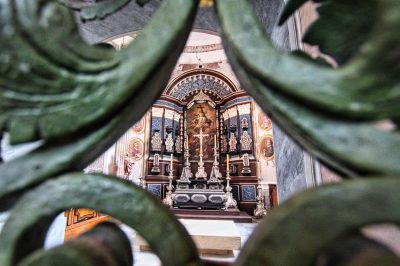
Timisoara is rich in magnificent baroque churches and is characterized by its multicultural heritage. In the middle of the 18th century, the German and Hungarian populations were able to enjoy this church, which is now the second largest Baroque church in south-eastern Europe after the cathedral in Oradea. The church is the seat of the Bishop of Timisoara and a feast for the eyes. Inside, you will come across so much gold and marble that you will wonder how such a project could have been completed at a time when the Austrians and Turks were constantly fighting over this region and the construction of military facilities should have had priority. The crypt with the remains of numerous bishops is also worth seeing.
Muzeul de Artă (Palatul Baroc)
The Muzeul de Artă art museum at Piața Unirii is the most important such institution in the region. And as befits such an important collection, the exhibition is presented in a very special setting. The museum is located in the so-called Baroque Palace (Palatul Baroc). In addition to over 90 paintings by the Craiova-born portrait painter Corneliu Baba, contemporary Romanian, Banat and Western European (mainly Italian) art is on display here, and there are also regular temporary exhibitions. The palace was built in the 18th century and was formerly the seat of the imperial and royal governor and later served as the residence of the commander of the Soviet troops stationed here, among others.
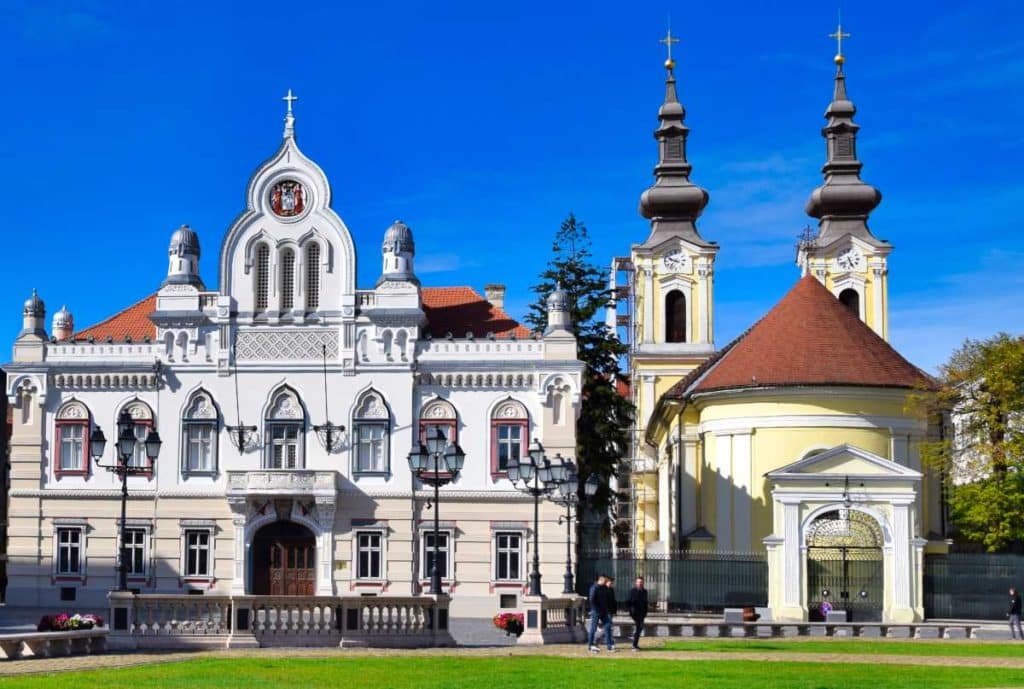
Catedrala Sârbească
The baroque Serbian Orthodox Cathedral of Timisoara is an absolute eye-catcher in Piața Unirii. The church was built in the middle of the 18th century and the two filigree towers were added at the end of the 18th century. In the past, the proportion of Serbs in the city’s population was significantly higher than it is today, so there are three Serbian Orthodox churches in Timisoara. A total of seven Serbian bishops found their final resting place here at Piața Unirii. Not only is the magnificent interior of the cathedral with its gilded iconostasis a real eye-catcher; the rear of the building in combination with the neighboring vicarage, which was built at the same time, makes for a beautiful photo motif.
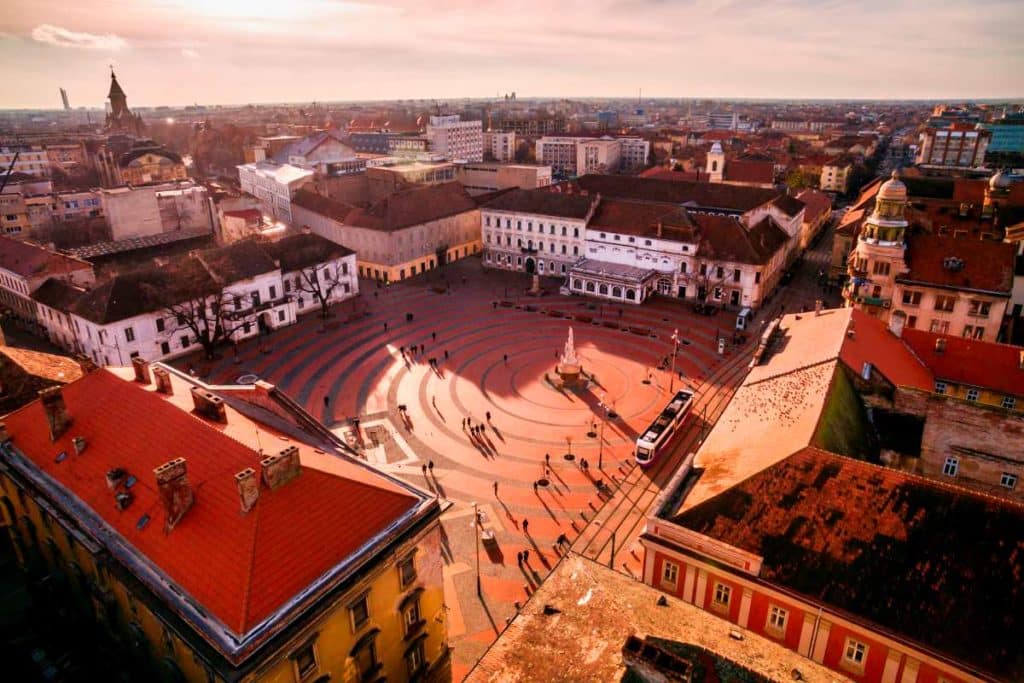
Piața Libertății
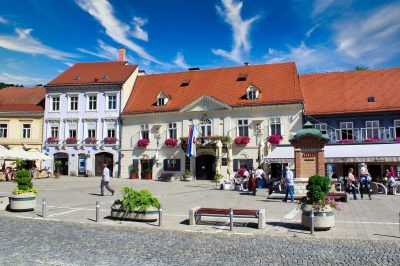
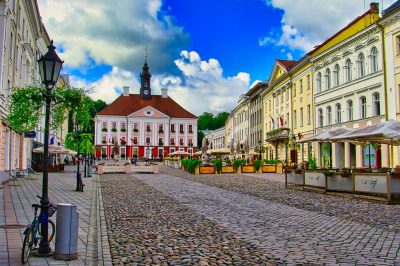
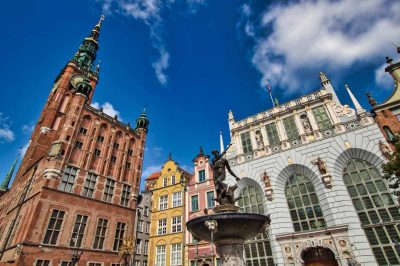
Alongside Piața Unirii and Piața Victoriei, Piața Libertății is the third most important square in Timisoara. Formerly known as a parade ground, Austrian troops used to parade here. After the unification of the Romanian territories in Alba Iulia, it was given the name Piața Libertății (Freedom Square). In addition to the town hall described below, the imposing military casino and the neighboring military headquarters, which were built on the remains of an Ottoman bazaar, are particularly eye-catching. In 2015, the square was completely redesigned, with several trees and green areas having to make way. You can see the result in the picture. The new pattern, arranged in a circle around the Nepomuk monument, looks stylish, but many residents still don’t like it because of the loss of the trees.
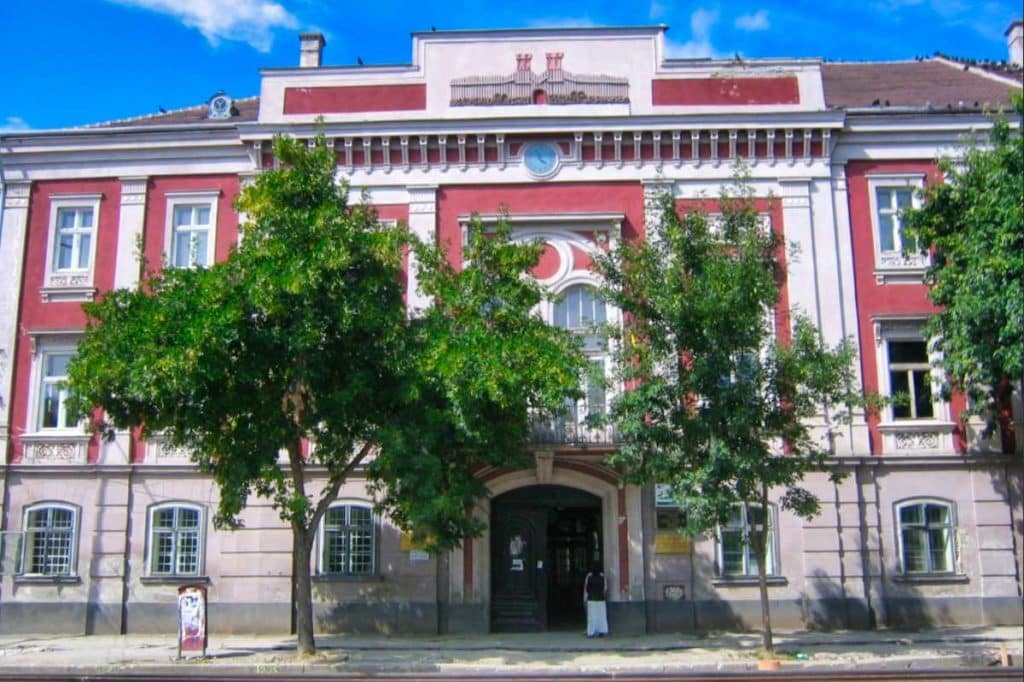
Primăria Veche
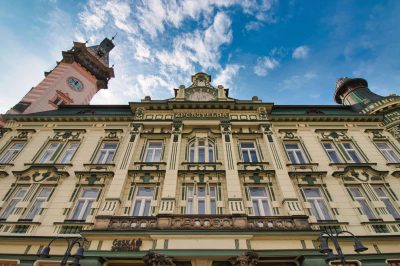
The most striking building on the square is the Primăria Veche, the Old Town Hall. It was built on the remains of an old hammam and was designed in the mid-18th century by the Italian master builder Pietro del Bronzo as the “German Town Hall”, as the German settlers wanted their own town hall. Over the course of time, the building has undergone several renovations, so that today it presents itself as a colorful mix of Renaissance and Baroque elements. Today, it is home to the university’s music faculty, among other things. From there, students have a beautiful view of the square and the Nepomuk statue, which is located directly in front of the Old Town Hall. The baroque masterpiece not only depicts Nepomuk, the patron saint of the Banat people, but also Mary with a wreath and commemorates the victims of a plague epidemic.
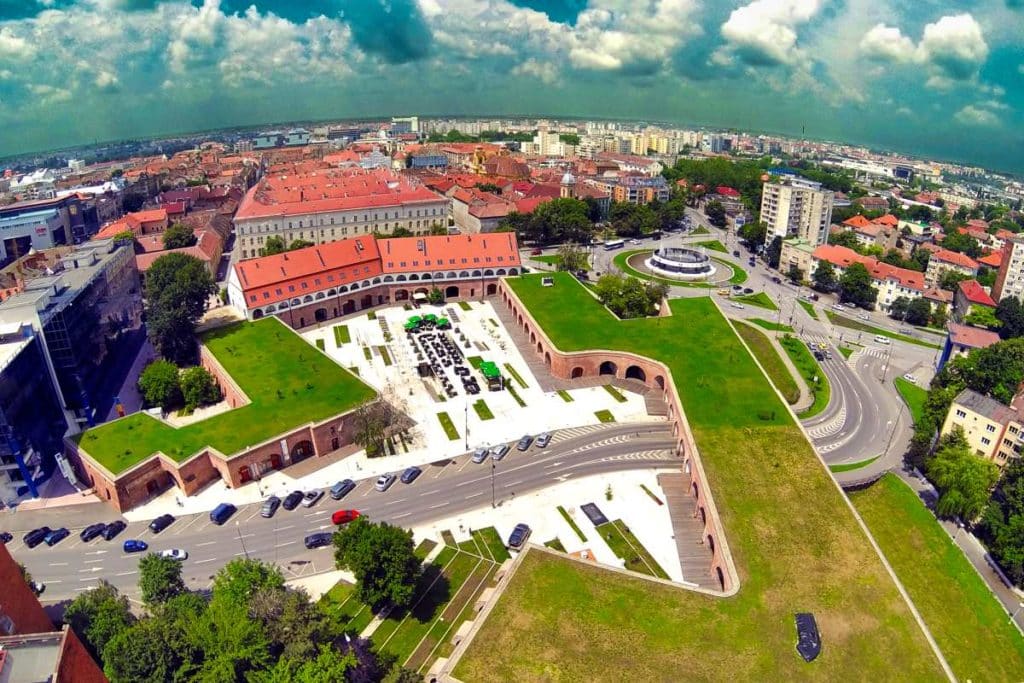
Bastionul Maria Terezia
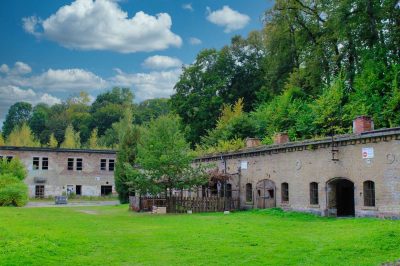
The eastern end of the old town is formed by the bastion named after Empress Maria Theresa. The Austrians maintained nine bastions in the city, which together formed the fortress of Timisoara. The town therefore had a similar function to Karlsburg. The bulwark was built in the middle of the 18th century. However, with the advancing development of weapons, especially increasingly powerful artillery, such fortifications quickly became obsolete. In addition, the town was already bursting at the seams around a hundred years after the fortress was built. It was therefore decided to demolish the complex, leaving only a few smaller parts of the Timisoara fortress in addition to the Maria Theresa bastion.
The communists originally wanted to demolish the Maria Theresa bastion, but then decided to integrate it into the cityscape. A multi-lane road now runs through the middle of the complex, while the casemates have been renovated. Today, part of the Banat National Museum (see below) is housed here, as well as a court, several restaurants and clubs and an art gallery. So there is plenty to discover!
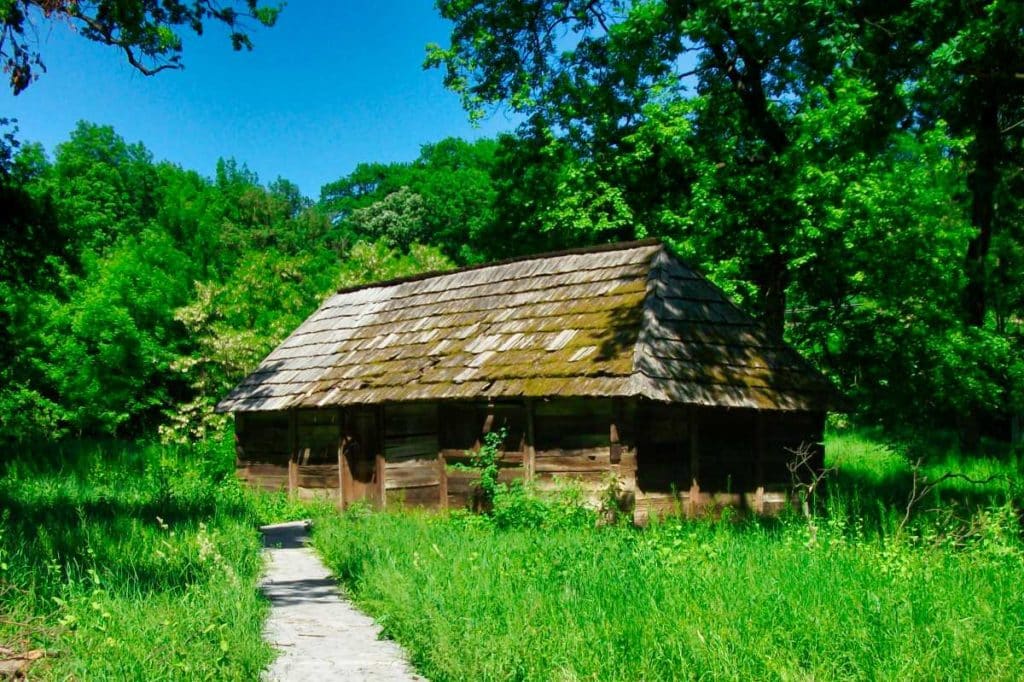
Muzeul Național al Banatului
The Banat National Museum is a complex comprising several exhibitions. The roots of the museum go back to the late 19th century and originally focused on archaeology. Since 1948, the museum has been located in Hunyadi Castle, which has now been undergoing renovation for ten years. In addition to exhibitions on history and archaeology, natural science exhibits and much more are expected to be on display again at the end of 2021. The museum also has a branch on the outskirts of the city, the village museum. Here you can visit over 50 historical buildings and get an impression of life in the region in earlier times. Another branch is the art museum described above.
Memorialul Revoluției
On 16.12.1989, around 1000 demonstrators gathered in the center of Timisoara. But what had happened? The reason for this was the arrest of the priest Laszlo Tökes, who had openly opposed the communist regime. The government troops quickly used force to disperse the demonstration, which was also accompanied by strikes. Ceauşescu, the Romanian dictator, did not like this, however, because his order to shoot at the demonstrators went unheeded. Fortunately, only batons were used. The revolution was, of course, unstoppable.
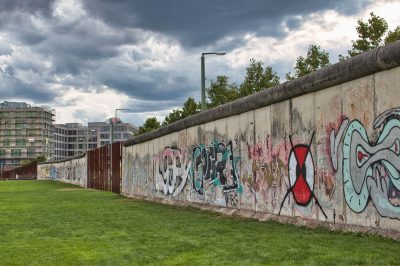
Mass demonstrations broke out in Timisoara and this time the security forces fired; several people were killed. A day later, however, some soldiers fraternized with the demonstrators and laid down their weapons. And so Timisoara became the first city in Romania to renounce the dictator. Today, a museum commemorates this unique event, which was initially hardly known in the country due to cut power lines. The museum not only commemorates the event, but also places it in the context of the Cold War and deals with Ceauşescu’s life. A section of the Berlin Wall can also be seen in front of the museum.
Grădina Botanică
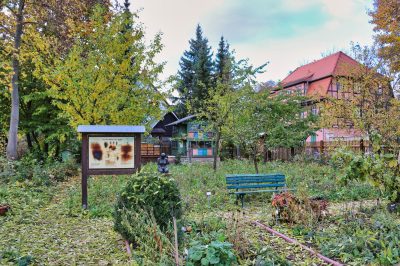
Do your feet hurt after exploring the city? Then it’s off to the city’s botanical garden. Conveniently, it is located directly behind the Altstadtring. It was built during the communist era and redesigned shortly before the fall of communism. It has been a nature reserve since 1995 and with an area of 84,000 you can walk here for hours or simply take a break. The plants come from all over the country and give a good overview of the Romanian flora. But there are also tropical plants in a greenhouse and a Japanese garden to discover here. And if you are interested in history, you can still see the remains of the old fortress here.
Practical tips
Are you hungry, want to spend the night in the city or need more information? Then our practical tips will help you.
Tourist information
The central tourist information office is located at 2 Alba Iulia Street, where you can get competent help every day during the week from 8 am to 4 pm. We can also recommend the German-language website temeswar.info, which contains practical information as well as many descriptions of places of interest.
Food and drink
- Merlot. Elegant restaurant where you can enjoy artfully designed, upscale cuisine at more than moderate prices.
- Tinecz. The dishes at Tinecz are more down-to-earth and rustic, but no less delicious. In addition to barbecue classics, there are also modern interpretations of Romanian dishes.
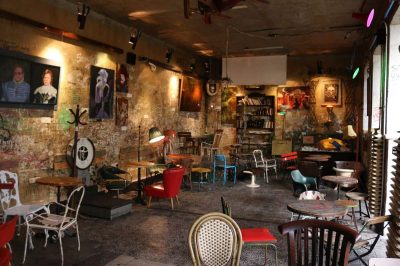
- Scârț Loc Lejer. Is this still a pub or already a museum? Scârț Loc Lejer has collected all kinds of bric-a-brac from the communist era, which you can view over a beer and Romanian classics.
Overnight stay
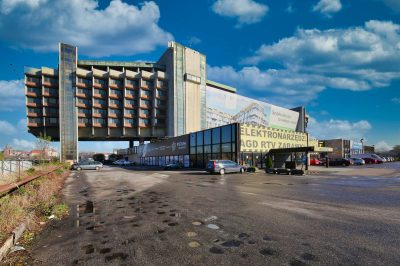
- North Star Continental*. The hotel block in the city center doesn’t look much from the outside, but the location is almost unbeatable. The prices are also moderate and there is an outdoor pool!
- Hotel Savoy*. Picturesquely situated on the banks of the Bega, this four-star hotel surprises with affordable prices that are absolutely unusual for this type of establishment. The rooms are modern, no-frills and leave nothing to be desired.
- Hotel Reghina Blue*. The Reghina Blue also has a pool. The slightly greater distance to the center is more than made up for by the friendly team and the stylish rooms.
Tours
To explore the city, we recommend this inexpensive tour*. Here, you will be guided through the city in English in around two hours and learn a lot about the history of this place.
Book tips
Would you like to find out more about Timisoara and Romania or are you planning a vacation in Romania? Then the following books will help you:


Letzte Aktualisierung am 2026-10-13 / Affiliate Links / Bilder von der Amazon Product Advertising API
The travel guide Romania not only describes Timisoara, but also all other parts of the country, contains wonderful descriptions of Romanian history and culture and gives you lots of practical tips for traveling in the country.

Letzte Aktualisierung am 2026-10-13 / Affiliate Links / Bilder von der Amazon Product Advertising API
If you are interested in literature, then the Europa Erlesen series is the right thing for you. Whether you are traveling to Timișoara or not, you can at least take a literary journey to the Romanian capital, where various writers have their say.

Letzte Aktualisierung am 2026-10-12 / Affiliate Links / Bilder von der Amazon Product Advertising API
Something for nostalgics: The illustrated book shows today’s Timisoara from a historical perspective, focusing in particular on the legacy of the Habsburgs.